E.D Mnangagwa to stay President of Zimbabwe after signing CAB3 into law
E.D. Mnangagwa will be the president of Zimbabwe for 2 more years after signing the controversial CAB3 into law on July 7, 2026.
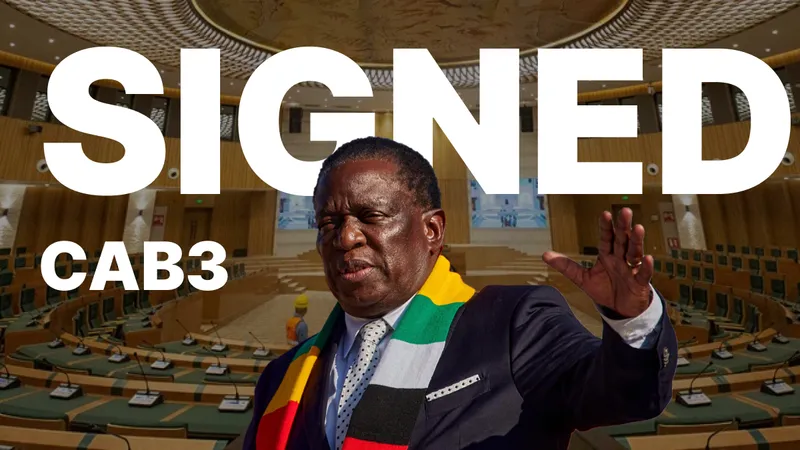
The signing of the Constitution of Zimbabwe Amendment (No. 3) Bill, now known as the Constitution of Zimbabwe Amendment (No. 3) Act (No. 6 of 2026), was officially announced by the Chief Secretary to the President and Cabinet, Dr. Martin Rushwaya, in an Extraordinary Government Gazette. The presidential assent follows a series of countrywide legislative consultations and intense parliamentary debates that initially began in February 2026.
Key Presidential and Electoral Shifts
The newly enacted law introduces major changes to the country's executive and electoral systems:
- Term Extension: The Act extends the presidential election cycle from five to seven years, allowing President Mnangagwa to remain in office past his original 2028 term limit.
- Electoral College: Zimbabweans will no longer directly elect the president; instead, Parliament will sit as an Electoral College to vote for the head of state after a general election.
- Senate Expansion: The law grants the President authority to appoint 10 additional Senators, increasing the total number of seats from 80 to 90.
If you want to understand all the changed and implication brought by CAB3 read our CAB3 Simply Explained article.
Parliamentary Votes and Amendments
The bill successfully bypassed opposition resistance after intense debate in both chambers, where Parliament invoked its Standing Orders to extend sessions past midnight.
- Final Vote Count: The National Assembly passed the bill with an affirmative vote of 226 to 41, while the Senate passed it with a 75 to 4 majority. Members of the Citizens Coalition for Change (CCC) voted against the bill.
- Withdrawn Clauses: During the readings, Justice Minister Ziyambi Ziyambi withdrew a clause that would have granted political rights to traditional leaders, and repealed a proposal to dissolve the Zimbabwe Gender Commission.
Backlash and Structural Adjustments
While state representatives framed the bill as a milestone for constitutional jurisprudence, the signing has drawn sharp criticism from civil society, senior civil servants, and retired military generals who view it as an unconstitutional move to retain power. Critics note that the changes were pushed through without a public referendum and directly benefit the incumbent.
Beyond the presidency, the operational signing of CAB3 immediately strips the Zimbabwe Electoral Commission (ZEC) of its voter registration duties, transferring them back to the Registrar General, and establishes a separate commission to handle future constituency delimitation. Public interviews for the judiciary have also been officially eliminated.
